Summary: Runner’s knee is pain around or behind the kneecap caused by repetitive stress, and it is common after months of marathon training. This article explains what it is, why it often shows up after race day, how to care for it at home, and when Chicago runners should consider non-surgical knee pain treatment in Chicago to get back on the road.
The medal is hanging on a doorknob. The race photos are posted. It is the end of October, nearly three weeks after you crossed the finish line in Grant Park, and your knee still complains every time you take the stairs down to the Red Line.
A week or two of soreness after 26.2 miles is expected. A knee that still hurts now is telling you something else. Here is what is likely going on and how the right knee pain treatment in Chicago can have you training again by spring.
What Runner’s Knee Actually Is
Runner’s knee is the common name for pain at the front of the knee, around or behind the kneecap.
Understanding Patellofemoral Pain Syndrome
The medical term is patellofemoral pain syndrome. Your kneecap, the patella, glides in a groove at the end of your thigh bone each time you bend and straighten your leg. When it does not track smoothly, or when the joint is loaded more than it can tolerate, the tissue behind and around the kneecap becomes irritated. The result is a dull, aching pain that gets worse on stairs, when squatting, running downhill, or after sitting with your knees bent for a long time.
Why It’s So Common Among Marathon Trainers
Running puts several times your body weight through the knee with each stride, and a marathon build involves hundreds of thousands of strides. The kneecap depends on your quadriceps and hip muscles to stay centered. As mileage climbs and those muscles fatigue, the hips drop, the knee drifts inward, and the kneecap gets pulled off its ideal path. First-time marathoners are especially prone because their mileage increases faster than their tissues adapt.
How Months of Training Take a Toll
Runner’s knee rarely comes from one bad run. It builds over a training cycle.
Repetitive Impact on the Lakefront Trail
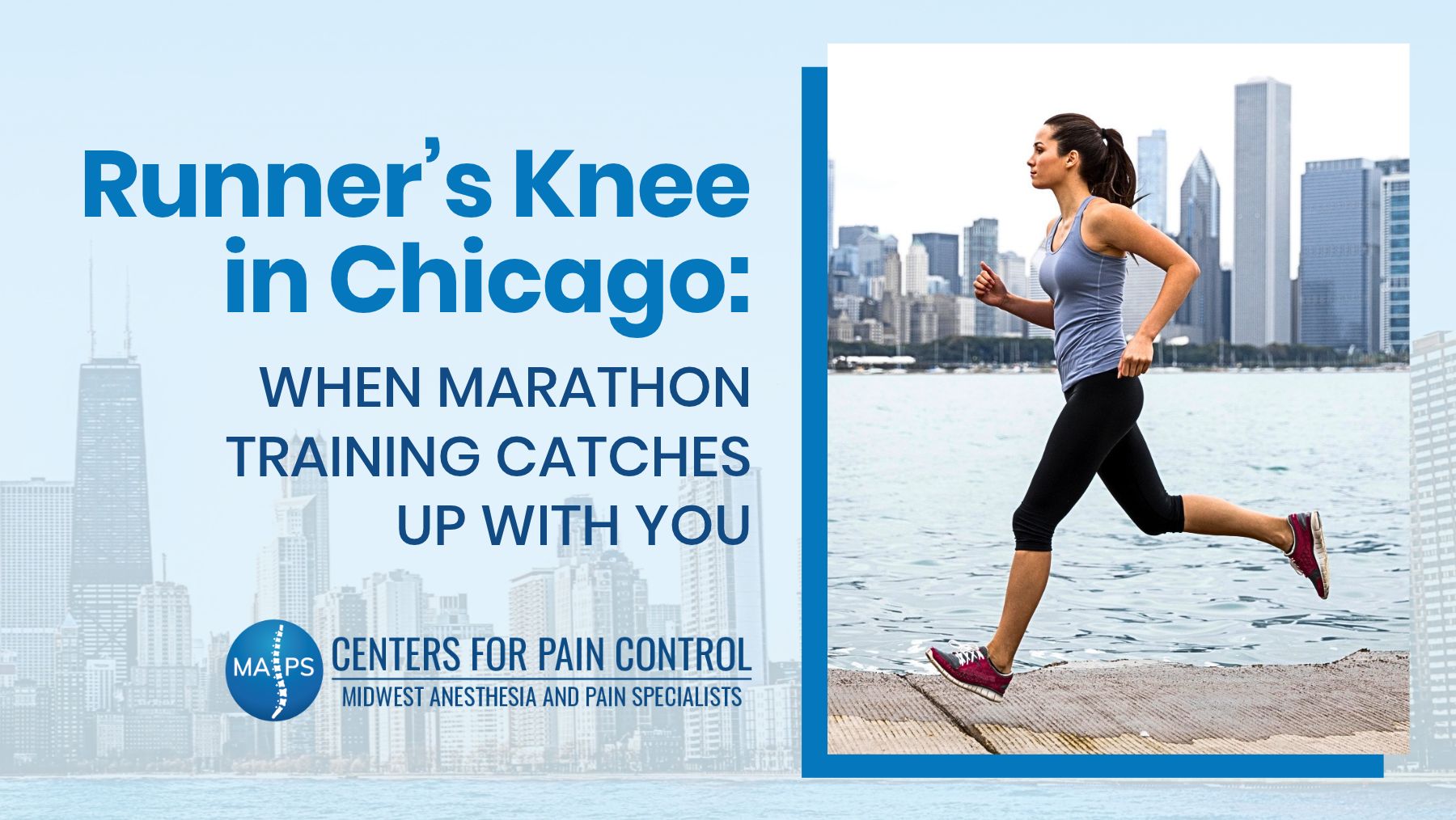
The Lakefront Trail is one of the best places in the country to log long runs. It is also 18 miles of mostly pavement. Hard, flat, unchanging surfaces load your joints the same way on every step, with none of the variation a softer trail provides. Add worn-out shoes and the slope of the path edge, and the same spot behind the kneecap takes the stress mile after mile.
Overtraining Without Enough Recovery Time
Bone, tendon and cartilage get stronger during rest, not during the run. Jumping weekly mileage too quickly, skipping cutback weeks, running easy days too fast, and dropping strength work when the schedule gets crowded all leave the knee with more load than it can recover from. By peak weeks in late summer, many runners are already carrying a low-grade ache into the taper.
Race Day and the Days That Follow
The marathon itself is often what turns a nagging knee into a painful one.
Why Marathon Distance Pushes Knees Past Their Limit
In the last 10 kilometers your form changes whether you notice or not. Stride shortens, hips sag, and the muscles that absorb impact are too tired to do their job. More of each landing goes straight into the joint. If the kneecap was already irritated, those final miles through Pilsen, Chinatown and up Michigan Avenue add a great deal of stress in a short time.
Post-Race Swelling and Pain That Doesn’t Resolve
General soreness and stiffness should fade within one to two weeks. Signs that you are dealing with more than normal recovery include pain at the front of the knee that persists past two weeks, swelling that returns after short runs, pain going down stairs, and a knee that aches after sitting through a movie.
Knee Pain Management for Chicago Runners
Early knee pain management is about reducing load so the irritated tissue can settle, without stopping movement altogether.
Rest, Ice, and Gradual Return to Activity
- Relative rest. Stop running for a short period, but stay active with swimming, cycling at low resistance or the elliptical if they are pain-free.
- Ice for 15 to 20 minutes after activity while the knee is sore.
- Strengthen hips and quadriceps with clamshells, side-lying leg raises, bridges and shallow wall sits.
- Check your shoes. Most running shoes are done after 300 to 500 miles.
- Return gradually. Start with short run-walk sessions on a softer surface and add no more than about 10 percent a week.
When Self-Care Isn’t Enough
See a specialist if pain has lasted more than two to three weeks despite rest, if it returns as soon as you resume running, or if you notice swelling, locking, catching, or a feeling that the knee might give out. Pain that came on with a pop or a specific twist should be evaluated promptly.
Getting Knee Pain Treatment at MAPS Centers for Pain Control
Runners tend to put off care because they are afraid of being told to stop. Our goal is the opposite.
Non-Surgical Options That Keep You Running
At MAPS Centers for Pain Control, our double-board certified, fellowship-trained physicians start with a thorough exam to confirm the diagnosis and rule out other causes. Your personalized treatment plan may include image-guided injections to calm persistent inflammation, bracing or taping to improve how the kneecap tracks, and physical rehabilitation focused on hip and quadriceps strength and running mechanics. Our sports medicine experience means we understand what a training calendar looks like. Learn more in our guide to non-surgical knee pain treatment in Chicago.
Building a Plan for This Season and Next
Winter is the best time to fix this. With no race on the calendar, you can let the knee recover and build the strength you skipped during peak mileage. We will map out a return-to-run timeline with you and coordinate with your physical therapist or coach. Many of our team members are active themselves, and they will treat your goal race as seriously as you do. For more on what is and is not true about sore knees, see our knee pain myths vs. facts.
Frequently Asked Questions
How long should runner’s knee pain last after a marathon before I see a doctor?
Normal post-marathon soreness should improve steadily and be mostly gone within two weeks. If pain around your kneecap is still present after two to three weeks, or it comes back each time you try to run, schedule an evaluation. Do not wait if there is noticeable swelling or the knee feels unstable.
Can I keep training for next year’s marathon while managing knee pain?
Usually, yes, with adjustments. Most runners with patellofemoral pain can keep up their fitness through low-impact cross-training while the knee calms down, then return to running gradually. Getting a diagnosis now gives you the whole winter to rebuild before spring base training begins.
What’s the difference between runner’s knee and a more serious knee injury?
Runner’s knee causes a dull ache at the front of the knee that builds gradually and worsens with stairs, squatting and sitting. A more serious injury, such as a meniscus or ligament tear or a stress fracture, is more likely to involve a specific moment of injury, sharp or localized pain, significant swelling, locking, or the knee giving way. An exam and imaging when needed can tell them apart.
Ready to Run Without the Ache?
If your knee is still sore weeks after the finish line, more rest by itself is unlikely to resolve it. Our specialists can pinpoint what is driving the pain and build a plan around your next start line. For knee pain treatment in Chicago from physicians who want you running, make an appointment at one of our 8 Chicagoland locations or call 773-917-8400.