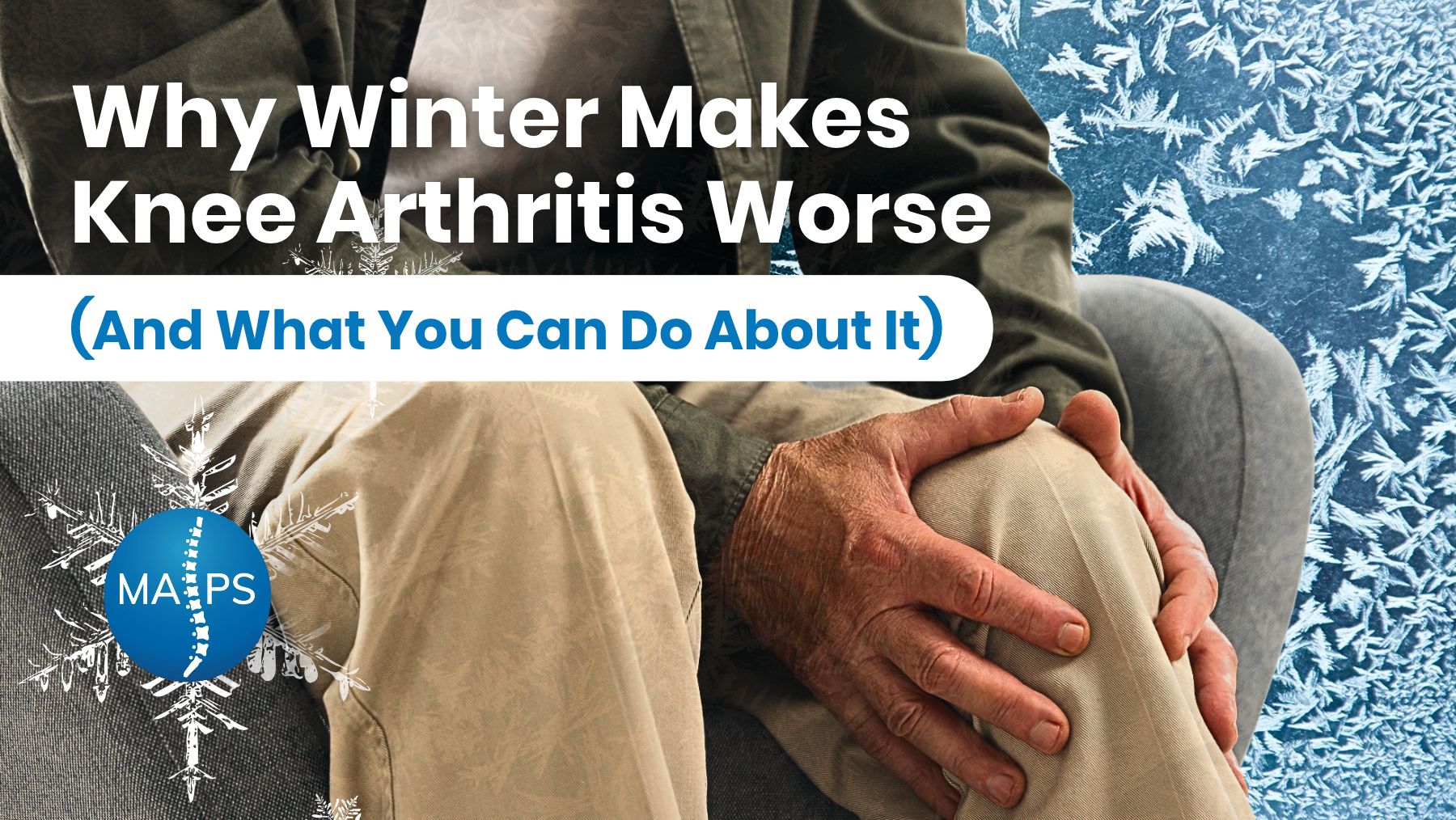
Summary: Many people with knee arthritis feel worse in cold, damp weather, and research offers partial support for what they report. Changes in barometric pressure, cold temperatures and reduced winter activity may all play a part. This article explains the science, how to recognize a weather-related flare, what helps at home, and when to see a knee pain doctor in Chicago.
Your knees knew about the cold front before the forecast did. You felt it on the stairs Tuesday night, a deep ache that had not been there over the weekend. By Wednesday morning the wind was coming off the lake and the temperature had dropped 25 degrees.
If that sounds like your winters, you are not imagining it. Here is what researchers understand about weather and arthritis, what you can do at home, and when a knee pain doctor in Chicago can help.
The Science Behind Weather and Knee Pain
The link between weather and joint pain is real for many people, though the research is mixed and the exact mechanism is still debated.
A 2019 UK study called Cloudy with a Chance of Pain followed thousands of people with chronic pain using a smartphone app. Days with higher humidity, lower pressure and stronger winds were modestly more likely to be painful days. On the other hand, a 2017 analysis of more than 11 million Medicare visits found no connection between rainy days and joint pain appointments. The fairest reading is that weather affects some people more than others, and the effect is usually moderate.
How Barometric Pressure Affects Joint Tissue
Barometric pressure is the weight of the air around you. When it falls ahead of a storm, there is slightly less pressure on your body. One leading theory is that tissues around the joint expand a little in response. In a healthy knee you would never notice. In an arthritic knee, where cartilage has thinned and the joint lining is already inflamed, that small change may be enough to irritate sensitive nerves.
Why Cold Temperatures Make Joints Stiffer
Cold has more direct effects. The fluid that lubricates your knee becomes thicker at lower temperatures, so the joint moves less freely. Muscles and tendons tighten. Blood flow to the limbs decreases as your body protects its core temperature. Cold may also make pain nerves more reactive. Together these make a worn joint feel stiff and sore.
Why Chicago Winters Are Especially Hard on Arthritic Knees
Chicago does not only get cold. It gets cold quickly and stays unpredictable for months.
Frequent Pressure Swings From Lake Effect Weather
Our weather is shaped by fast-moving fronts and by Lake Michigan. Temperature swings of 20 or 30 degrees in a day are common from November through March, and each front brings a change in pressure and humidity. If your knees respond to change more than to cold itself, a Chicago winter gives them a great deal to respond to.
Reduced Activity During Cold Months Compounding the Problem
This may matter more than the weather. When sidewalks are icy and it is dark by 4:30, daily steps fall off. The quadriceps and hip muscles that support the knee weaken within weeks of reduced use. Many people gain a few pounds over the holidays, and each extra pound adds several pounds of load across the knee with every step. Less movement also means less circulation of joint fluid, which cartilage depends on for nutrition.
Recognizing a Weather-Related Flare-Up
A weather-related flare tends to be stiff and achy, tied to a change in conditions, and eases when the weather settles.
Morning Stiffness That Takes Longer to Ease
With osteoarthritis, morning stiffness normally loosens within about 30 minutes. In winter you may notice it takes longer to get going, especially on the first trip down the stairs or after a long drive.
Aching That Seems to Predict a Storm
A deep, dull ache that builds a day or so before snow or a sharp temperature drop is the classic pattern. It usually affects the joints that already bother you and fades once the front passes.
Managing Winter Knee Pain at Home
You cannot change the forecast, but warmth and movement can take the edge off a flare.
Heat Therapy and Gentle Movement
- Apply a heating pad or warm towel for 15 to 20 minutes before activity
- Take a warm shower first thing and move your knees through their range while you are in it
- Dress in layers and consider a thermal knee sleeve outdoors
- Do gentle heel slides and seated knee extensions before you get out of bed
- Warm up the car before long drives
Staying Active Despite the Cold
Motion is what keeps an arthritic knee comfortable. Move your routine indoors. Walk laps at Woodfield or the local park district fieldhouse, swim in a heated pool, or use a stationary bike at low resistance. Keep up simple strength work such as sit-to-stands from a chair and straight leg raises. Short sessions most days work better than one long one.
When It’s Time to See a Knee Pain Doctor
Home care is a reasonable first step. It is not a plan for an entire Chicago winter if it is not working.
When Home Management Isn’t Enough
See a knee pain doctor if:
- Pain lasts beyond a couple of weeks or keeps you awake
- The knee is swollen, warm or red
- It locks, catches or gives way
- You are avoiding stairs, errands or time with family because of it
- Each winter is noticeably worse than the last
Non-Surgical Treatment Options at MAPS
At MAPS Centers for Pain Control, our double-board certified, fellowship-trained physicians focus on relieving knee pain without surgery. After an exam and a review of your imaging, your personalized treatment plan may include image-guided injections to reduce inflammation and improve joint movement, genicular nerve treatments that quiet the nerves carrying pain signals from the knee, cryoneurolysis, bracing and physical rehabilitation.
Our team understands how discouraging it is to dread half the year, and we take the time to hear what you want to get back to. Explore your options in our guide to non-surgical knee pain treatment in Chicago, or sort out common misconceptions in knee pain myths vs. facts.
Frequently Asked Questions
Is it really the weather, or is something else causing my knee pain?
It can be both. Weather may aggravate a knee that already has arthritis, but it does not cause arthritis and should not be blamed for everything. Pain that persists regardless of conditions, or that comes with swelling, locking or instability, suggests a problem in the joint that deserves an evaluation. A physician can tell you what is driving your symptoms.
Can moving to a warmer climate actually help arthritis pain?
Some people do feel better in warm, dry climates, and plenty of Chicagoans notice their knees improve on a winter trip south. Moving does not change the arthritis itself, though, and people in warm regions report weather-related pain too. Before you list the house, it is worth finding out how much relief treatment can provide where you live.
What non-surgical treatments help most with weather-related knee flare-ups?
The treatments that help most are the ones that address the underlying joint problem, because a calmer knee reacts less to weather. Depending on your diagnosis, that may mean targeted injections, genicular nerve treatments for longer-lasting relief, bracing to offload the worn part of the joint, and strengthening. Your physician will recommend a combination based on your exam.
Don’t Wait for Spring to Feel Better
If every cold front sends you back to the heating pad, your knee is signaling an underlying issue that will still be there in April. A knee pain doctor in Chicago can identify what is driving your flare-ups and relieve it with non-surgical care. Make an appointment at one of our 8 Chicagoland locations or call 773-917-8400.