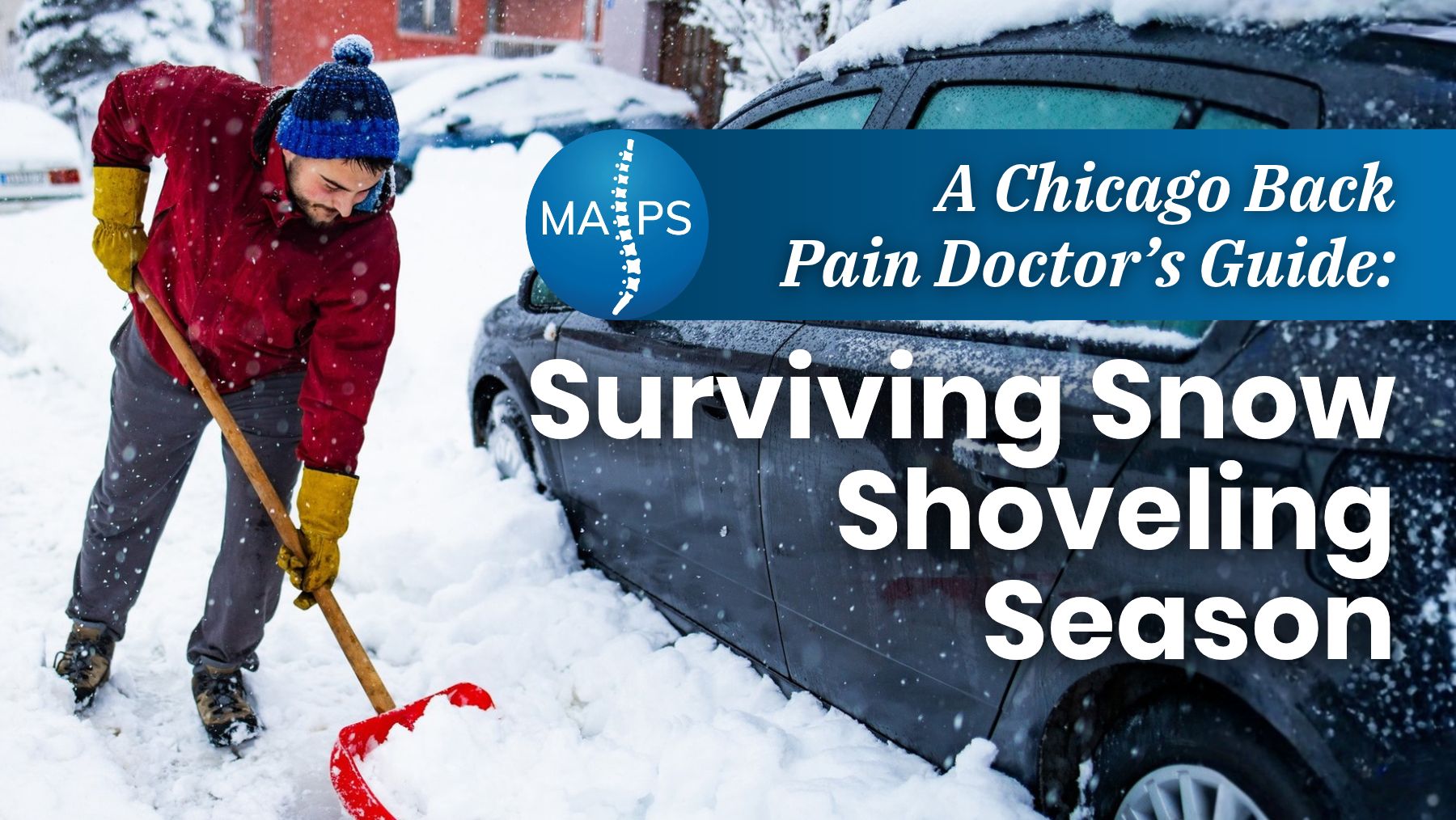
Summary: Snow shoveling sends about 11,500 Americans to the emergency room each year, and the lower back is the most commonly injured area. This article explains why shoveling is hard on your spine, how to do it more safely, and when lingering pain means it is time to see a back pain doctor in Chicago.
The first real snow always seems to land on a weekday. You have 20 minutes before you need to leave, the plow has left a wall of slush at the end of the driveway, and the car is buried on a street where somebody already claimed the next spot with two lawn chairs. So you grab the shovel and go as fast as you can.
That rush is where most winter back injuries begin. A few small changes can spare you weeks of pain, and knowing when to call a back pain doctor in Chicago can keep a strain from becoming a long-term problem.
Why Snow Shoveling Is Harder on Your Back Than You’d Think
Shoveling is heavy, repetitive lifting done in the cold by people who have not trained for it. Your back absorbs most of that load.
The Numbers Behind Winter’s Most Common Injury
A 17-year study published in the American Journal of Emergency Medicine found that snow shoveling led to an average of about 11,500 emergency department visits a year in the U.S. The lower back was the most frequently injured body region, accounting for roughly a third of cases. Overexertion caused more than half of all injuries, and slips and falls caused about one in five.
The weight adds up fast. A shovelful of wet snow can weigh 15 to 20 pounds. Clear a typical two-car driveway and you may have moved well over a ton.
Why Cold Muscles Are More Prone to Strain
Cold muscles and tendons are stiffer and less elastic. Blood vessels near the skin narrow to conserve heat, so tissue gets less circulation exactly when you are asking the most of it. Add that most shoveling happens first thing in the morning, when spinal discs hold more fluid and are under more internal pressure, and the risk climbs.
How Shoveling Actually Injures the Back
Two mechanisms account for most shoveling injuries: overexertion and sudden, uncontrolled movement.
Overexertion From Repetitive Lifting and Twisting
The classic motion is bend, scoop, lift, twist and throw. Bending forward with a load at the end of a long handle multiplies the force on your lower spine. Twisting while still bent and loaded is the position in which discs and the small joints of the spine are most vulnerable. Repeat it a hundred times and muscles fatigue, form slips, and ligaments and discs take over work the muscles were doing.
Slips, Falls, and Sudden Awkward Movements
Ice under fresh snow causes hard falls onto the tailbone, hip or outstretched hand. Even a near-fall can injure you. The sudden jerk as you catch yourself can strain back muscles or irritate a disc in an instant.
Safer Shoveling Habits to Protect Your Back
You cannot skip shoveling in Chicago. You can change how you do it.
Proper Lifting Technique and Posture
- Push, don’t lift, whenever you can. Move snow to the edge and leave it there.
- Bend your knees and hips, not your waist. Keep your back straight and let your legs do the lifting.
- Keep the load close. Hold the shovel with one hand near the blade.
- Turn your feet, not your spine. Step in the direction you are throwing.
- Take smaller scoops. In deep or wet snow, clear it in layers.
- Shovel early and often. Two inches three times is easier on your back than six inches once.
- Rest every 10 to 15 minutes, and stop at once if you feel chest discomfort or shortness of breath.
Warming Up Before You Head Outside
Spend five minutes getting warm indoors first. March in place, do some gentle torso rotations and a few bodyweight squats. Dress in layers, wear boots with real tread, and consider an ergonomic shovel with a curved or adjustable handle so you bend less.
When Shoveling Pain Means It’s Time to See a Back Pain Doctor
General muscle soreness that eases over two or three days is normal. Pain that behaves differently needs an evaluation.
Pain That Lingers Beyond a Few Days
At MAPS Centers for Pain Control, our guidance is consistent: if back pain has not resolved within one week, see a specialist. Pain that stays sharp, wakes you at night, or makes it hard to stand upright is telling you that more than a tired muscle is involved. Early care is simpler and faster than treating a problem that has been building for months.
Numbness, Tingling, or Pain Radiating Down the Leg
Symptoms that travel are a sign of nerve irritation, often from a disc. See a back pain doctor promptly if you notice:
- Pain that shoots into the buttock or down the leg
- Numbness or pins and needles in the leg or foot
- Weakness, such as a foot that drags or a knee that buckles
Loss of bladder or bowel control, or numbness in the groin, requires emergency care.
Getting Back Pain Relief at MAPS Centers for Pain Control
A shoveling injury does not have to cost you the winter. Most can be resolved without surgery.
Non-Surgical Treatment Options Available Across Chicagoland
Every MAPS physician is double-board certified and fellowship-trained in pain medicine. After a careful exam to find the underlying cause, your personalized treatment plan may include image-guided injections to calm inflamed nerves or joints, other advanced interventional techniques, and physical rehabilitation to restore strength. You can read more in our guide to back pain relief in Chicago or on our back pain treatment page.
Same-Week Appointments When Winter Pain Won’t Wait
We offer same-week appointments at our 8 Chicagoland locations, from the North Side and Midway to Des Plaines, Woodridge, Frankfort and Crown Point, Indiana. Everyone at MAPS, from the schedulers who answer your call to the physician who examines you, works to make you feel at ease. We accept most major insurances.
Frequently Asked Questions
Is it normal to be sore after shoveling snow, or should I see a doctor?
Some soreness is expected. Shoveling works muscles hard, and a dull, widespread ache that improves each day is a normal response. See a doctor if the pain is sharp or one-sided, if it is not clearly improving after a few days, or if it comes with leg pain, numbness or weakness.
How long should shoveling-related back pain last before it’s a concern?
Ordinary muscle soreness peaks within a day or two and fades within about three to five days. Our threshold at MAPS is one week. If your back pain has not resolved by then, it is time for an evaluation. Come in sooner if the pain is severe or you have any symptoms in your legs.
What’s the safest way to shovel snow if I already have a history of back pain?
Push snow instead of lifting it, use a lightweight ergonomic shovel, clear small amounts frequently and take regular breaks. Warm up first. If you have had a disc injury or a recent flare-up, the safest option is often a snow blower or paying a neighbor’s teenager. Ask your physician what is reasonable for your back.
Don’t Let One Snowfall Sideline Your Winter
If your back has not bounced back a week after shoveling, or pain is traveling into your leg, it is unlikely to settle with more waiting. Our specialists can find what is driving your pain and build a non-surgical plan to relieve it. To see a back pain doctor in Chicago this week, make an appointment or call 773-917-8400.