Summary: Acute back pain starts suddenly and usually improves within days to weeks. Chronic back pain lasts 12 weeks or longer and often needs a different approach. This article explains the difference, why it changes treatment, the signs that pain is becoming chronic, and what to look for in a back pain specialist in Chicago.
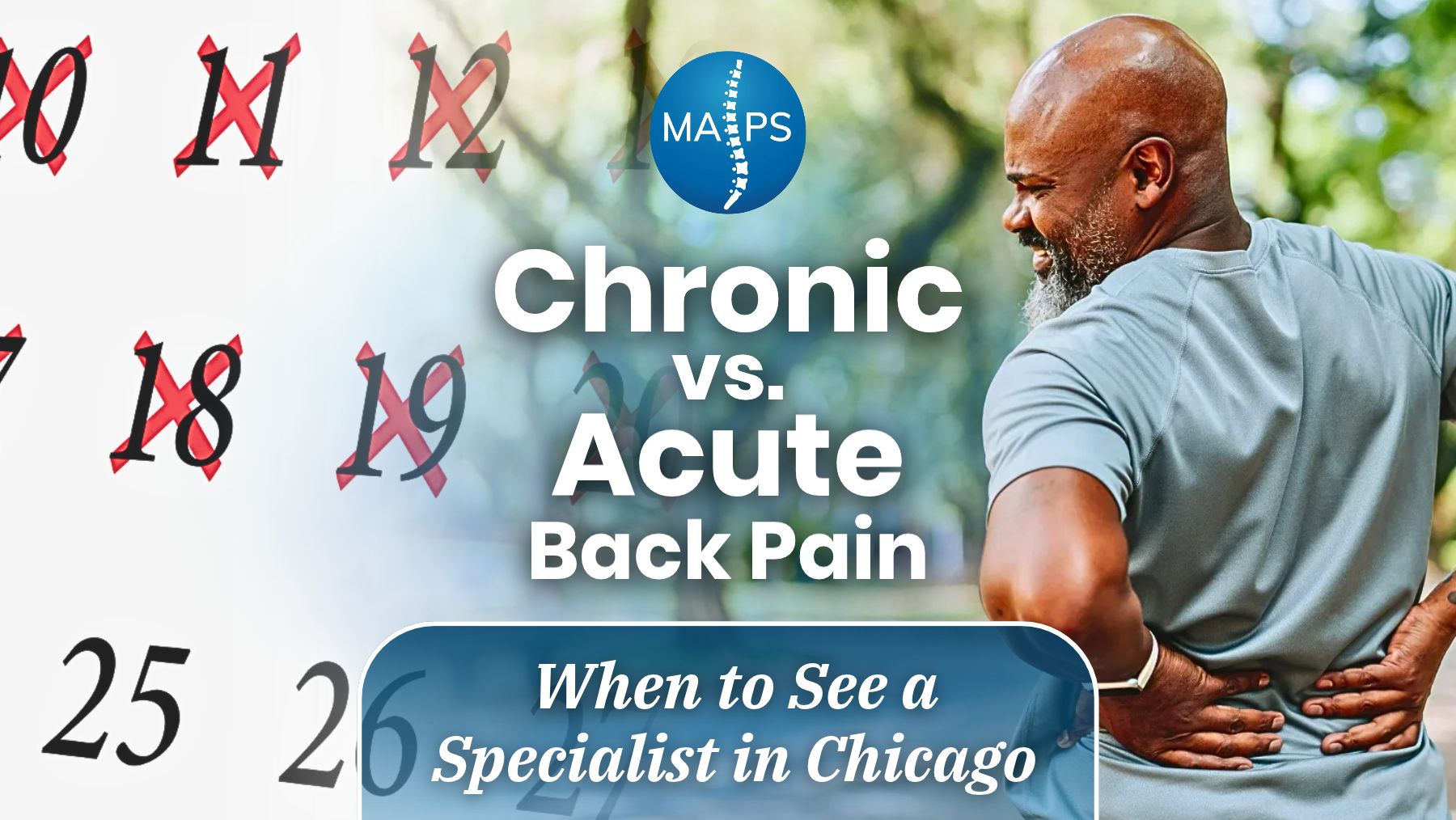
Back pain has a way of making you bargain with the calendar. Give it through the weekend. Give it until after the holidays. Somewhere along the way, a tweak from moving a couch becomes the thing you plan your mornings around.
Whether your pain is acute or chronic is more than a label. It shapes what kind of care will help, and it is often the clearest signal that it is time to see a back pain specialist in Chicago.
Understanding the Difference Between Acute and Chronic Back Pain
The difference comes down to time and to what is keeping the pain going.
Acute Pain: A Sudden Injury or Strain
Acute back pain comes on quickly and has a clear trigger: lifting a suitcase, a fall on an icy sidewalk, a hard brake on the Kennedy. It is usually mechanical, meaning a muscle, ligament or joint was stressed past what it could handle. Acute pain can be intense, but it typically improves steadily over days to a few weeks as the tissue heals.
Chronic Pain: When Symptoms Persist Past 12 Weeks
Back pain is considered chronic when it lasts 12 weeks or longer, according to the National Institute of Neurological Disorders and Stroke. By that point the original injury has usually had time to heal. Ongoing pain points to something that has not been addressed: a disc that is still irritating a nerve, arthritis in the small joints of the spine, or nerves that have become more sensitive and keep sending pain signals.
Why the Distinction Actually Matters for Treatment
Acute and chronic back pain respond to different strategies. Treating one like the other is a common reason people stay stuck.
How Acute Pain Is Typically Managed
Most acute back pain responds to simple measures. Stay gently active instead of resting in bed, use heat or ice, and return to normal movement as you can tolerate it. The goal is to let tissue heal while keeping the spine moving.
Why Chronic Pain Often Needs a Specialist’s Approach
Chronic pain rarely resolves with more of what did not work in the first month. It calls for a precise diagnosis of the pain generator, the specific structure producing your symptoms, and treatment aimed directly at it. That is the work of interventional pain medicine: image-guided procedures that calm an inflamed nerve root, quiet an arthritic joint, or interrupt pain signals that will not switch off, paired with rehabilitation to restore strength.
Signs Your Back Pain Has Moved From Acute to Chronic
You do not need to wait 12 weeks to recognize the pattern. Two signs show up early.
Pain That Keeps Coming Back
An episode fades, then returns a month later with less provocation. Each flare lasts a little longer than the one before. Recurring pain usually means the underlying cause was never resolved, only quieted.
Pain That Starts Affecting Daily Life and Mobility
You stand on the Blue Line because sitting hurts. You have stopped carrying groceries up to your third-floor walk-up in one trip. You turn down plans because of the drive. When pain starts making your decisions, it has moved past a simple strain.
Our guidance at MAPS Centers for Pain Control is to see a specialist if back pain has not resolved within one week, and right away if you have leg weakness, numbness in the groin, or loss of bladder or bowel control.
What to Look for in a Back Pain Clinic in Chicago
Not every back pain clinic in Chicago practices the same way. Two things are worth asking about before you book.
Double Board-Certified, Fellowship-Trained Physicians
Pain medicine is its own specialty. A physician who is double-board certified holds certification in pain medicine and in a primary specialty such as anesthesiology or physiatry. Fellowship training adds a dedicated year or more focused on diagnosing and treating complex pain. Those credentials mean your physician has performed the procedure you need many times and knows when it is not the right one.
A Non-Surgical, Root-Cause Treatment Philosophy
Look for a practice that starts with why you hurt, not with a standard protocol. The right clinic will explain your diagnosis in plain language, offer minimally invasive options first, and build a plan around what you want to get back to.
Getting Back Pain Treatment at MAPS Centers for Pain Control
MAPS was founded by interventional pain specialists Dr. Darrel Saldanha and Dr. Thomas Pontinen, and every physician on our team is double-board certified and fellowship-trained. In late 2025, Dr. Timothy R. Lubenow, former chair of pain medicine at Rush University, joined our Chicago practice. He described the move as a way to “bring advanced treatments directly into the community.” That is the idea behind everything we do.
A Personalized Evaluation Before Any Treatment Begins
Your first visit is a conversation and a thorough exam. We review your history and any prior imaging, identify the underlying cause, and walk you through a personalized treatment plan. No two patients are the same, and you will not be treated like a chart number here. Our article on what to expect from your first visit covers the details, and our back pain relief guide explains the treatment options.
Eight Convenient Chicagoland Locations
Back pain treatment in Chicago should not require a long drive. We see patients at 8 Chicagoland locations: Chicago’s North Side and Midway, Des Plaines, Franklin Park, Hazel Crest, Woodridge, Frankfort and Crown Point, Indiana. We accept most major insurances. Read more about why patients choose MAPS as Chicago’s leader in responsible pain care.
Frequently Asked Questions
How do I know if my back pain is chronic or just taking a while to heal?
Look at the direction, not only the date. Healing pain gets a little better each week, even if slowly. Pain that has plateaued, keeps returning, or is spreading is behaving like a chronic problem regardless of where you are on the calendar. Twelve weeks is the formal definition, but you do not need to wait that long to be evaluated.
Do I need a referral to see a back pain specialist in Chicago?
It depends on your insurance. Many PPO plans let you schedule directly with a specialist. HMO plans usually require a referral from your primary care physician. Our team can check your coverage before your visit and help with the paperwork if a referral is needed.
What treatments does a back pain clinic offer that a primary care doctor doesn’t?
A back pain clinic provides advanced interventional techniques that are not available in a general practice. These include image-guided injections placed at the exact source of pain, procedures that quiet overactive pain nerves, neuromodulation and regenerative options. A specialist also has the diagnostic tools to identify which structure is responsible, which is what makes targeted treatment possible.
Stop Bargaining With the Calendar
If your back pain has lasted more than a week, keeps coming back, or has started to change how you live, it deserves a clear answer. A back pain specialist in Chicago can tell you what is causing it and what will relieve it without surgery. Make an appointment at MAPS Centers for Pain Control or call 773-917-8400.