Summary: Most hip pain from minor overuse resolves on its own within a week or two, but pain that lasts longer than that, radiates into the groin or thigh, or comes with stiffness that won’t improve deserves professional evaluation. A smaller set of symptoms, including inability to bear weight or pain following a fall, warrants immediate care. Because hip pain has many possible sources, an accurate diagnosis from a hip pain doctor is what determines whether treatment actually works.
Hip pain is easy to put off. It’s rarely dramatic enough to feel like an emergency, and there’s almost always a plausible explanation, you slept wrong, you overdid it at the gym, you’ve been sitting too much. Sometimes that’s exactly what it is. But there’s a point where waiting stops being reasonable, and knowing where that line sits is worth understanding before you cross it.
Why So Many Chicagoans Are Living With Hip Pain
Hip pain is common enough that a lot of people assume it’s simply part of getting older.
Common Causes of Hip Pain in Everyday Life
Prolonged sitting, repetitive activity, arthritis, bursitis, muscle strain, and referred pain from the lower back all contribute to hip pain in adults. Chicago’s long winters don’t help either, since reduced activity levels tend to weaken the muscles that stabilize the hip joint, making pain more likely once activity picks back up.
How Long Should You Wait Before Seeing a Doctor?
As a general guide, hip pain that hasn’t improved after two weeks of rest and self-care has moved past what you should expect to resolve on its own. Pain that’s worsening rather than plateauing is worth evaluating sooner than that.
Signs Your Hip Pain Is More Than Just Muscle Soreness
A few specific patterns distinguish ordinary soreness from something that needs attention.
Pain That Radiates Into the Groin, Thigh, or Lower Back
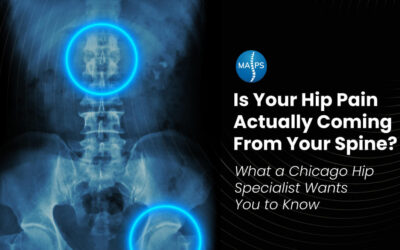
Pain that travels rather than staying localized often indicates joint involvement or nerve irritation rather than simple muscle strain. Groin pain in particular tends to point toward the hip joint itself, while pain radiating down the leg may involve the lumbar spine.
Stiffness and Reduced Range of Motion That Won’t Improve
Muscle soreness loosens up as you move. Stiffness that persists, particularly if you’re noticing you can’t rotate the hip as far as you used to or that getting in and out of a car has become awkward, suggests a structural issue within the joint.
Hip Pain After an Accident or Injury
Any hip pain that begins after a fall, car accident, or direct impact should be evaluated rather than monitored, since fractures and soft tissue injuries can present with pain that seems manageable at first.
When Hip Pain Becomes a Medical Emergency
Red Flag Symptoms That Require Immediate Attention
Certain symptoms warrant urgent care rather than a scheduled appointment:
- Inability to bear weight on the affected leg
- Sudden, severe pain following a fall or trauma
- Visible deformity of the hip or leg
- Fever alongside hip pain and swelling, which can indicate infection
- Sudden loss of sensation or significant weakness in the leg
How a Hip Pain Doctor Diagnoses the Root Cause
Physical Examination, Imaging, and Diagnostic Testing
A thorough evaluation includes hands-on testing to identify which movements reproduce your pain, range of motion assessment, gait observation, and imaging when needed to evaluate the joint and surrounding structures. In some cases, diagnostic injections help confirm exactly which structure is generating your symptoms.
Why an Accurate Diagnosis Changes Everything About Your Treatment
Hip pain can stem from the joint itself, the bursa outside it, surrounding tendons, or the lumbar spine referring pain into the region. Because each of those requires a different treatment approach, identifying the actual source is what separates a plan that works from one that produces temporary, partial relief.
Hip Pain Treatment Options at MAPS Centers for Pain Control
Interventional Pain Management for Hip Pain
Our interventional treatments target the specific structure generating your pain, using approaches like corticosteroid injections, joint injections, and nerve blocks depending on what the evaluation identifies.
Minimally Invasive Procedures That Avoid Surgery
Many hip conditions respond well to minimally invasive procedures that don’t require surgical intervention or extended recovery, allowing patients to return to normal activity far more quickly than a surgical route would allow.
Personalized Treatment Plans Built Around Your Condition
Every plan is built from your diagnostic findings and adjusted as you progress, relying on non-opioid approaches aimed at lasting relief rather than temporary symptom suppression.
Why Choose MAPS as Your Hip Pain Doctor in Chicago
Double Board-Certified Pain Specialists
Our physicians are double board-certified and fellowship-trained in pain management, bringing the diagnostic depth and procedural expertise that complex hip pain often requires.
8 Convenient Chicagoland Locations
With 8 locations across Chicagoland, both your initial evaluation and any follow-up care are accessible without a long commute working against you.
Don’t Wait: Schedule a Consultation at MAPS Today
If your hip pain has outlasted what rest and self-care should have handled, it’s worth finding out why. Schedule a consultation with MAPS Centers for Pain Control and get a real answer.