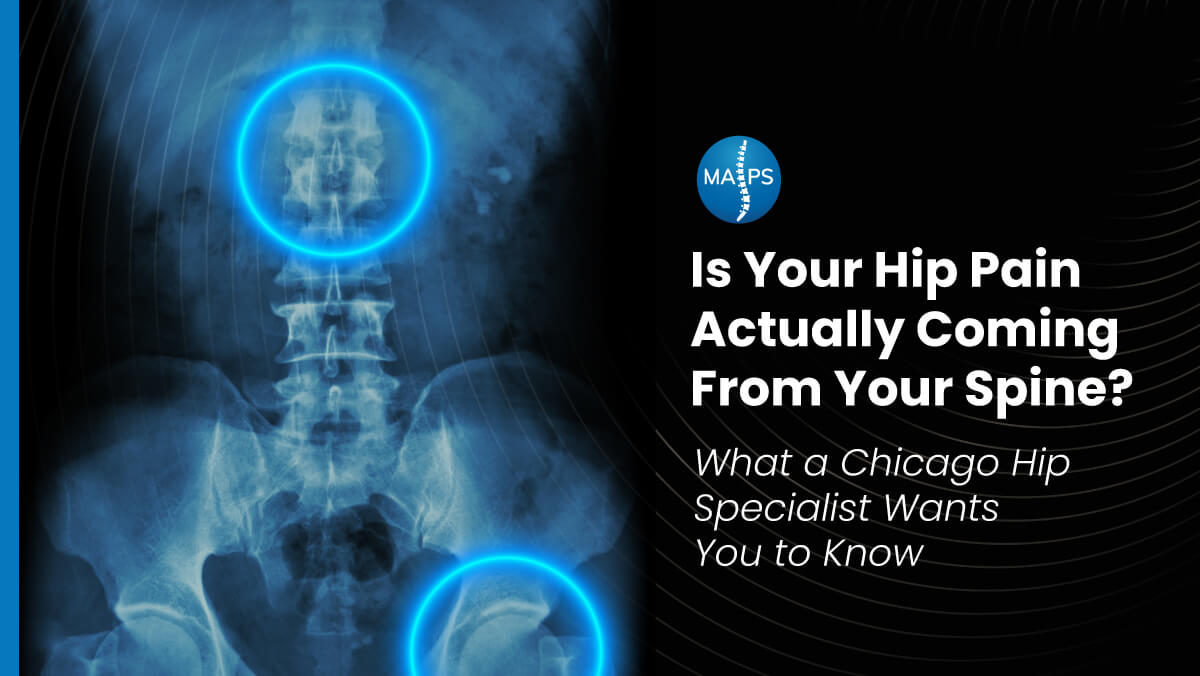
Summary: Hip pain doesn’t always originate in the hip. Lumbar disc herniation, spinal stenosis, and sacroiliac joint dysfunction can all refer pain into the hip, buttock, and thigh, producing symptoms that feel unmistakably like a hip problem. This is one of the more common reasons hip pain treatment fails: the treatment is aimed at the wrong structure. A comprehensive evaluation from a hip pain specialist that looks at both the hip and the spine is what identifies the true source and finally makes treatment effective.
If you’ve been treated for hip pain and it hasn’t worked, there’s a possibility worth taking seriously: your hip may not be the problem. It’s a frustrating scenario, but a genuinely common one, and recognizing it is often the turning point for patients who’ve spent months or years on treatments that never quite delivered.
Why Hip Pain Isn’t Always a Hip Problem
Where pain is felt and where pain originates are two different things, and the hip is one of the areas where that gap shows up most often.
How the Spine and Hip Are More Connected Than Most People Realize
The nerves that supply sensation to the hip, buttock, groin, and thigh originate in the lumbar spine. When those nerves are irritated or compressed anywhere along their path, the brain can interpret the resulting signal as pain in the hip region, even though the actual problem sits several inches away in the lower back.
Why So Many Hip Pain Patients Are Misdiagnosed
Patients understandably describe their symptoms by where they feel them, and a brief evaluation focused on the hip alone will often find something, mild arthritic changes on imaging, for instance, that seems to explain the pain. Treating that finding can produce partial or temporary relief while the real driver in the spine continues unaddressed.
How Spinal Conditions Cause Hip Pain
Several distinct spinal conditions produce hip pain through different mechanisms.
Lumbar Disc Herniation and Referred Hip Pain
When a disc in the lower back herniates and presses on a nearby nerve root, the resulting pain frequently radiates into the buttock, hip, and down the leg. Depending on which nerve root is affected, that pain can concentrate in the hip region strongly enough that patients never suspect their back is involved at all.
Spinal Stenosis and Its Effect on the Hip and Leg
Spinal stenosis, a narrowing of the spinal canal, compresses nerves as they exit the spine. This commonly produces hip, buttock, and leg pain that worsens with standing or walking and eases when sitting or leaning forward, a pattern that offers a useful diagnostic clue.
Sacroiliac Joint Dysfunction and Hip Pain
The sacroiliac joints connect the base of the spine to the pelvis, and dysfunction here produces pain in the lower back, buttock, and hip that’s especially easy to mistake for a hip joint problem given how close the structures sit to one another.
Hip Pain vs. Spine-Related Pain: How to Tell the Difference
Key Symptom Differences That Point to the Spine
A few patterns suggest a spinal source: pain that radiates below the knee, numbness or tingling in the leg or foot, pain that changes noticeably with position, particularly improving when you sit or bend forward, and hip pain accompanied by any lower back discomfort. True hip joint pain, by contrast, tends to concentrate in the groin, worsen with hip rotation, and come with stiffness and reduced range of motion in the joint itself.
Why the Location of Your Pain Can Be Misleading
Referred pain doesn’t respect anatomical boundaries. A patient can have significant lumbar nerve involvement and feel almost nothing in their back, with the entire symptom presentation showing up in the hip. Location alone simply isn’t reliable enough to identify the source.
When You Have Both Hip and Spine Issues Simultaneously
This is common, particularly in older patients, and it’s part of what makes accurate diagnosis so important. When both structures are contributing, treating only one leaves a meaningful portion of the pain in place, which patients often experience as treatment that “sort of worked” without ever fully resolving things.
How a Hip Specialist in Chicago Gets to the Real Source of Your Pain
Comprehensive Evaluation That Looks Beyond the Hip
A proper evaluation examines both the hip and the lumbar spine, testing which movements and positions reproduce your pain, assessing nerve function in the leg, and mapping the full distribution of your symptoms rather than focusing solely on where you point.
Diagnostic Testing That Identifies the True Root Cause
Beyond examination and imaging, diagnostic injections can be genuinely useful here. Numbing a specific structure and observing whether pain resolves provides direct evidence about where that pain is actually coming from, which is often the clearest way to settle the question when hip and spine involvement overlap.
Treatment Options at MAPS for Hip and Spine-Related Pain
Interventional Treatments for Referred Hip Pain
When the spine is the source, interventional treatments like epidural steroid injections, nerve blocks, and sacroiliac joint injections target the actual origin of the pain rather than the area where it’s felt.
Addressing Both the Hip and Spine When Both Are Involved
For patients with genuine dual involvement, treatment sequences both structures deliberately, often starting with whichever is generating the larger share of symptoms, then reassessing what remains.
Personalized Treatment Plans Built Around Your Diagnosis
Because the same hip pain can have entirely different origins across patients, every plan at MAPS is built from your specific diagnostic findings, using non-opioid, minimally invasive approaches wherever possible.
Why Choose MAPS as Your Hip Pain Specialist in Chicago
Double Board-Certified Pain Specialists Who Treat the Root Cause
Our double board-certified, fellowship-trained physicians evaluate the hip and spine together as a matter of course, which is exactly what identifying referred pain requires.
8 Convenient Chicagoland Locations
With 8 Chicagoland locations, thorough evaluation and consistent follow-up care are accessible wherever you’re based.
Get the Right Diagnosis and the Right Treatment: Schedule at MAPS Today
If hip pain treatment hasn’t worked for you, it may be time to look at whether your hip was ever the actual problem. Schedule a consultation with MAPS Centers for Pain Control to find the real source.